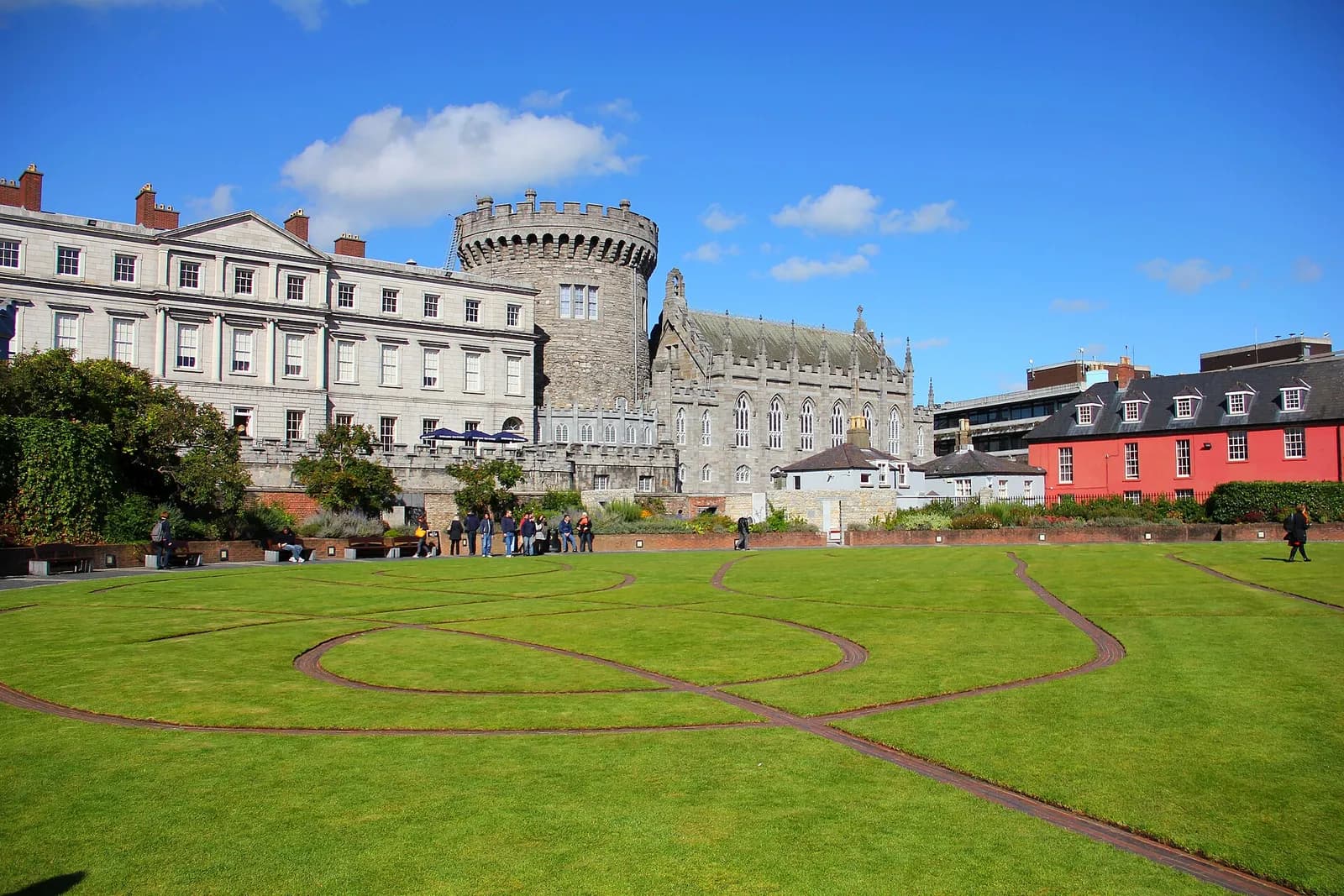
Dublin Castle has been a fortress, a treasury, a prison and the seat of British administration in Ireland. The State Apartments and medieval undercroft tell that story.
Dublin Castle is easy to miss. From Dame Street it looks like a government building behind a gate, which is exactly what it has been for most of its life. The original castle was built in the early thirteenth century on the site of a Viking settlement; for seven centuries it was the headquarters of English, then British, rule in Ireland. After independence in 1922 it was handed to the Irish government and remains a working state venue.
The guided tour is the better choice. It includes the medieval undercroft and the Viking excavation beneath the castle, the Gothic Chapel Royal, and the State Apartments, where presidential inaugurations and state dinners take place. The self-guided visit covers the State Apartments and the gardens but skips the excavation and chapel.
Check the opening status before you travel. The castle is currently closed to the public until 4 January 2027 while Ireland hosts the EU Council Presidency.
Practical tips
- Take the guided tour if you want the Viking excavation and Chapel Royal — the self-guided ticket does not include them.
- Book up to 15 days ahead; only a limited number of same-day tickets are sold.
- Pair the castle with Christ Church Cathedral and Dublinia, both a short walk away.
Getting there
A 5-minute walk from Trinity College and Christ Church. Buses on Dame Street, Lord Edward Street and George's Street. LUAS Green Line to St Stephen's Green or Red Line to Jervis.
Open in Google Maps →Accessibility
State Apartments, Coach House Gallery and gardens are accessible with lift access. The Viking Excavation is reached by stairs only. The upper courtyard has uneven surfaces.