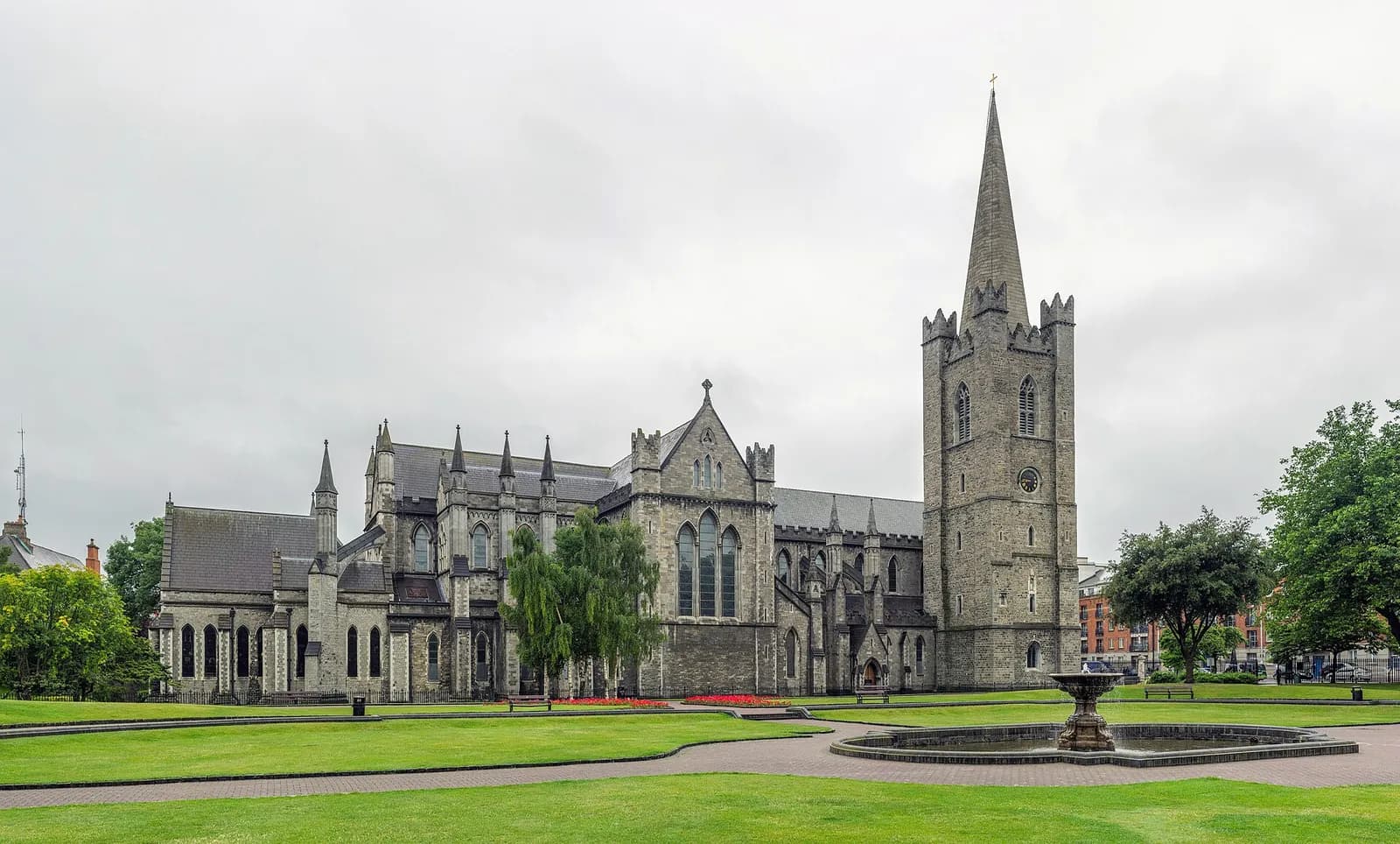
St Patrick's Cathedral has stood at the junction of Patrick Street and Upper Kevin Street for more than 800 years. Jonathan Swift is buried here.
The present St Patrick's Cathedral dates mainly from 1220–1259, but the site goes back further: a well nearby is where St Patrick is said to have baptised converts around 1,500 years ago. It is the National Cathedral of the Church of Ireland and the largest cathedral in the country, a Gothic building of stone arches, stained glass and a very long nave.
Jonathan Swift, author of Gulliver's Travels and dean of the cathedral from 1713 until his death in 1745, is buried here. So is his companion Stella. The Door of Reconciliation — the origin of the phrase "to chance your arm" — is in the north transept, and the choir school, founded in 1432, still sings twelve services a week during term.
Entry includes a self-guided visit with an audio guide. Free guided tours usually run at 10:30 and 14:30 Monday–Saturday, subject to change. Sunday visiting is split around services, so check the timetable before you go.
Practical tips
- Go early on a weekday for the quietest visit; Sunday access is split around services.
- Book online for groups of 10 or more; individual visitors can buy at the door.
- Combine with Marsh's Library next door using the €17 joint ticket.
Getting there
Walkable from the city centre at Patrick Street / Upper Kevin Street. Dublin Bus routes 27 and 77a stop nearby. About 10 minutes on foot from Christ Church.
Open in Google Maps →Accessibility
Wheelchair accessible with a lift and a step-free route from the road; ask staff at the gate. Accessible toilet, hearing loop, large print, Braille and audio guides available.