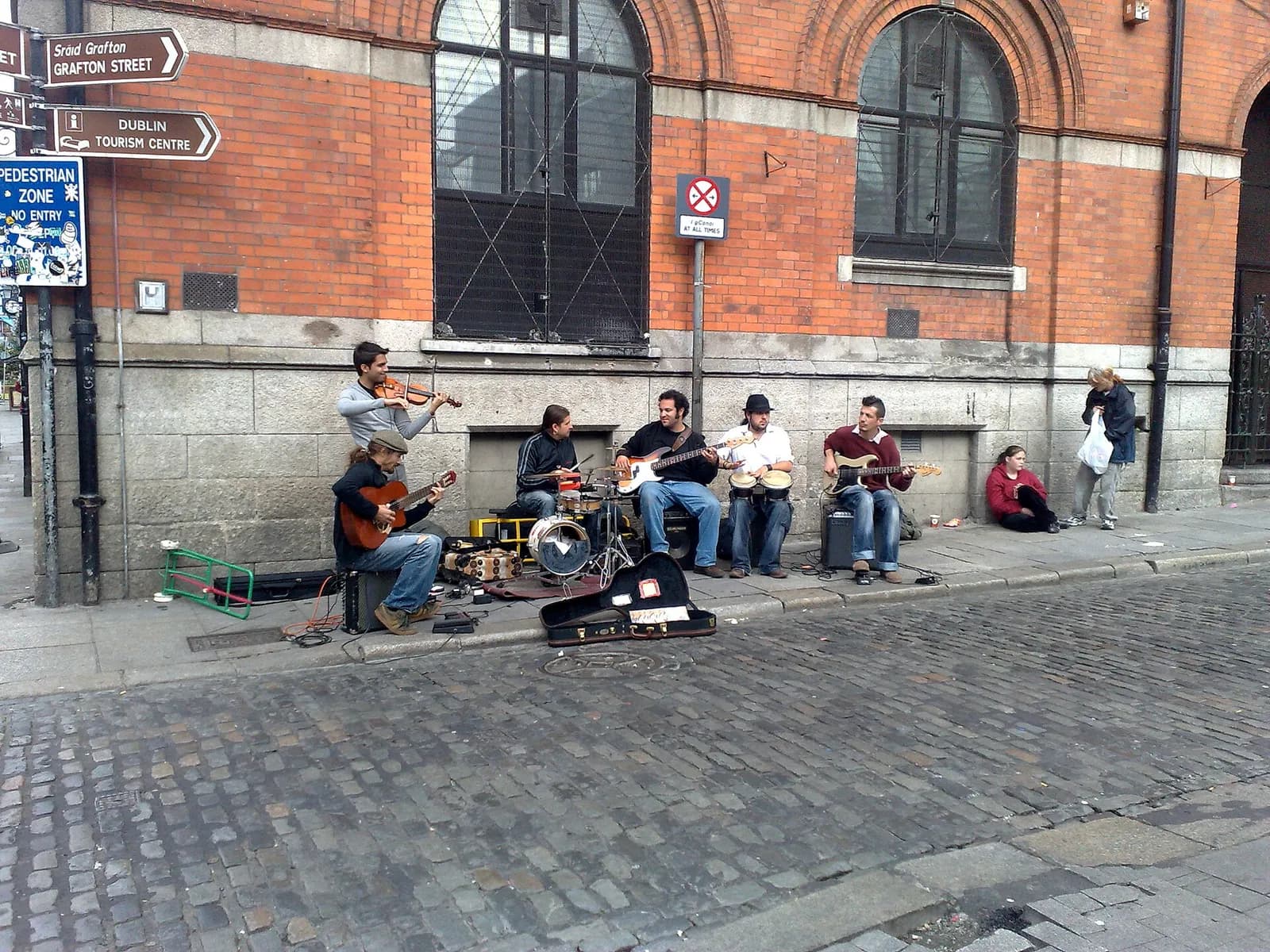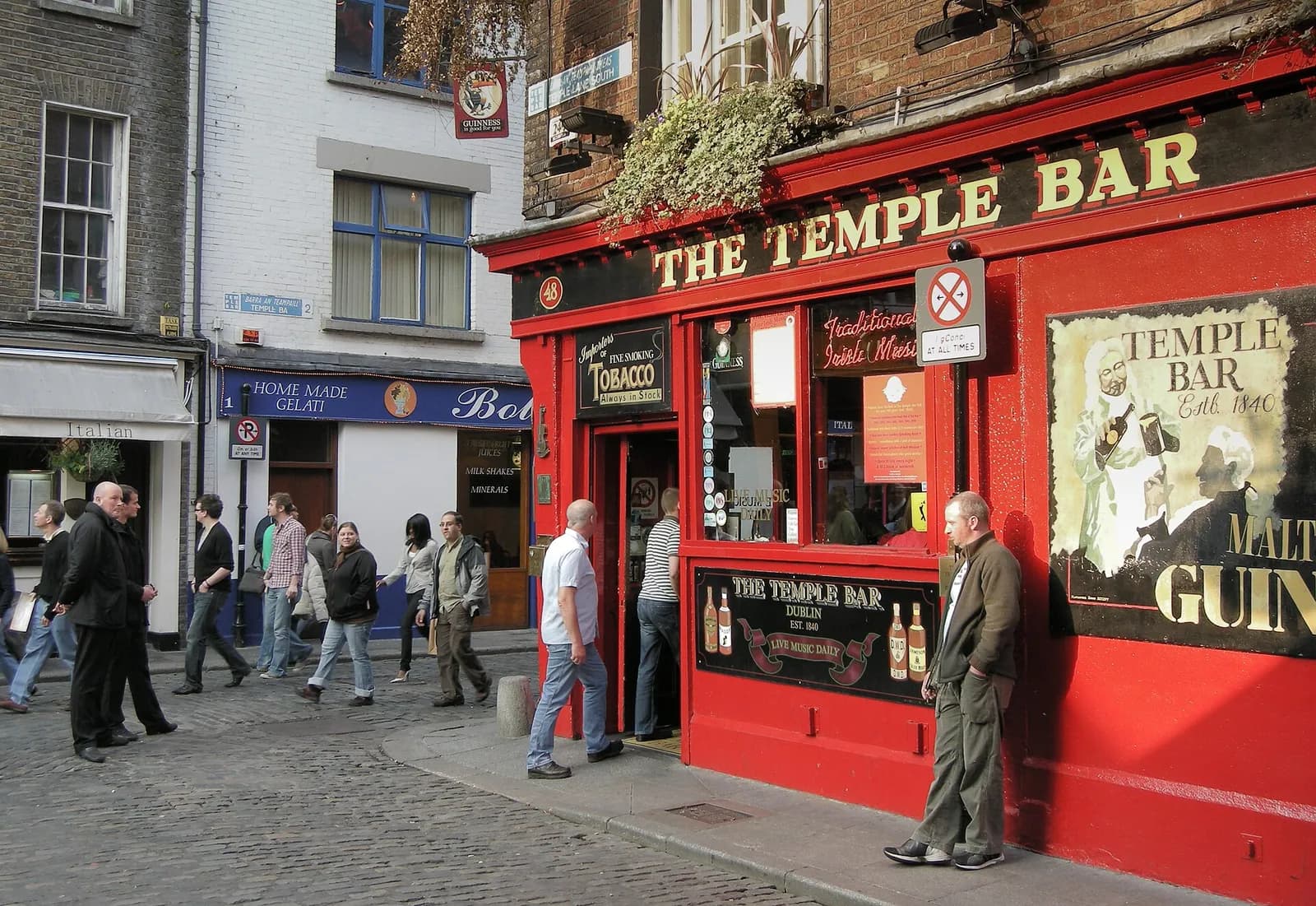
Temple Bar is Dublin's best-known neighbourhood: cobbled lanes, pubs, galleries, the Saturday food market and a lot of live music. The streets are free to wander.
Temple Bar has a marketing problem: everyone knows it as the place to drink, which means the best parts are often overlooked. The district is bounded roughly by the Liffey to the north, Dame Street to the south and Fishamble Street to the west, and it takes its name from Sir William Temple, who built a house and gardens here in the early 1600s.
Start at Meeting House Square, where the canopy roof hosts screenings and the Saturday food market, and the National Photographic Archive and Gallery of Photography are both free. Walk the Icon Walk's painted lanes, find Love Lane's murals, and browse Cow's Lane for independent shops. In the evening, Smock Alley Theatre, the Project Arts Centre and the Button Factory programme theatre, contemporary art and music.
The pubs are part of the experience, but they are not the whole experience. Come in the morning for the lanes and the market, book a show for the evening, and save the drinking for somewhere with a seat.
Practical tips
- Come in the morning for the lanes, galleries and food market; evenings are crowded and loud.
- The Temple Bar Pub does not take reservations — arrive early or choose a quieter pub.
- Pair the district with Dublin Castle and Christ Church, both a five-minute walk away.
Getting there
Central and walkable from Trinity College, Dublin Castle and O'Connell Bridge. Buses stop on Wellington Quay, Parliament Street and Dame Street. No LUAS stop in Temple Bar itself.
Open in Google Maps →Accessibility
The Temple Bar Square scheme removed steps and kerbs and widened footpaths, but some lanes retain cobbles. Individual venues vary — check with each one.